




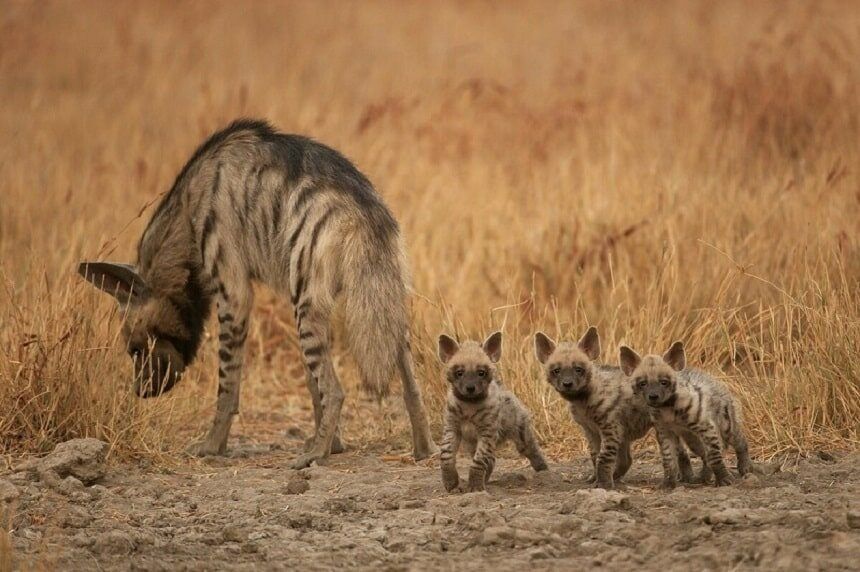
Tajikistan has proposed increasing the protection status of the striped hyena by imposing a complete international ban on its trade. This proposal was made at the 20th Conference of the Parties (CoP20) of the CITES Convention, currently taking place in Samarkand from November 24 to December 5. However, the CITES Secretariat rejected the initiative, stating that the main threats to the hyena are habitat loss and conflicts with herders, rather than international trade.
The CITES conference, the largest international meeting on the conservation of endangered species, has brought together about 3,000 delegates from 185 countries to discuss the protection of rare species and new measures to safeguard wildlife.
Tajikistan and the protection of natural resources
Tajikistan's proposal to increase the protection of the striped hyena highlighted the importance of safeguarding natural resources and supporting sustainable fisheries and wildlife development in the country. In recent years, the hyena has been found in southern Tajikistan, although its numbers remain very low. Previously believed to be extinct in the country, the striped hyena has suffered from habitat loss and conflicts with herders.
A special event, “Striped Hyena at Risk,” was organized at the conference by Tajikistan, Uzbekistan, and NABU Germany. Despite Tajikistan's concerns, the CITES Secretariat decided that climate change and habitat loss remain the most significant threats to the species.
Conservation efforts in Central Asia
The conference also discussed ongoing efforts to protect other rare animals in Central Asia. Programs aimed at preserving the snow leopard and Bukhara deer continue in Kyrgyzstan and Tajikistan through the Vanishing Treasures project. These efforts focus on reducing conflicts between leopards and herders and preventing poaching.
In Kazakhstan and Tajikistan, the CAMCA project is actively working to restore the Bukhara deer population, including the restoration of riparian forests and improvement of water sources.
Return of the leopard to Central Asia
One of the key topics at the conference was the fate of the Central Asian (Turkestan) leopard, one of the rarest leopard subspecies in the world. Recent camera trap footage has confirmed the presence of individual leopards in the Pamiro-Alai mountains. This species, once nearly extinct due to poaching and habitat destruction, is now protected under Tajikistan's Red Book and is under international conservation efforts.
Tajikistan’s financial contributions to CITES
Despite its small economy, Tajikistan continues to actively participate in international environmental initiatives. At the conference, a new contribution scale for 2026-2028 was presented, with Tajikistan’s contribution set at only 0.003% of the total. This amounts to $195 annually, reflecting the country's economic situation. However, this does not limit Tajikistan’s participation in CITES, and the country retains full voting rights.
Legislative Improvements in Tajikistan
Tajikistan will need to update its environmental laws to meet CITES standards. The conference noted that countries whose laws do not fully comply with CITES requirements must accelerate reform processes. In particular, improvements are needed in the mechanisms for monitoring illegal wildlife trade.
Samarkand Declaration
At CoP20, Central Asian countries signed the Samarkand Declaration and the Action Plan for 2026-2032, aimed at combating illegal wildlife trafficking and protecting rare species such as the snow leopard and saiga antelope. The new agreement includes strengthened cooperation among government agencies and the creation of regional mechanisms for wildlife crime investigations.
 Руcский
