




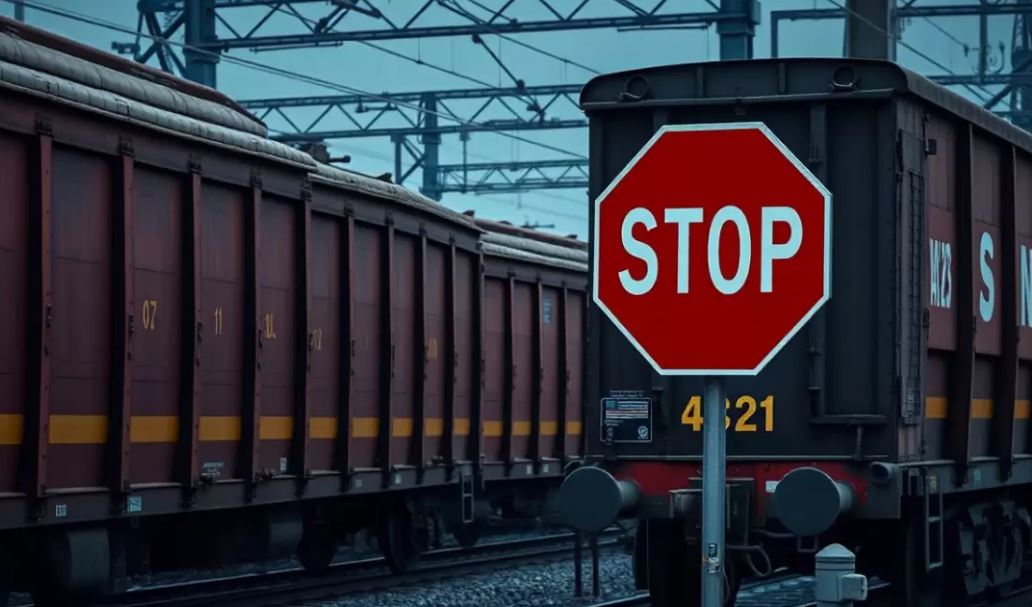
Kazakhstan Temir Zholy (Kazakh Railways, or KTZ), the national railway company, has imposed a ban on the transportation of all types of cargo to stations in Uzbekistan, Tajikistan, Turkmenistan, Afghanistan and Kyrgyzstan via the Saryagash border crossing from November 22 to 24. According to Ulysmedia, the restriction was introduced due to the accumulation of over 8,800 railcars and the delayed acceptance of trains by neighboring railway administrations.
The company stated that the order will be lifted once the situation stabilizes and train reception improves at the Saryagash junction.
Kazakh media previously reported that from November 12 to 20 a similar ban was in place on the acceptance of all cargo through Saryagash in the direction of Central Asian countries, except for grain, milling products and perishable goods.
According to Bizmedia, the restriction was prompted by a difficult operational situation caused by the reduced acceptance of trains by Uzbekistan’s railways, which in turn led to significant congestion on the tracks.
Meanwhile, the digital business platform Forkagro reports that the freight transportation situation through Saryagash towards Central Asia has not improved. Market participants are calling on Kazakhstan Temir Zholy to take urgent measures.
The beginning of the peak transportation season — especially for grain — has further strained cargo flows between Kazakhstan and Uzbekistan. Thousands of railcars continue to accumulate on the approaches to Saryagash.
Last week, the railway authorities of Kazakhstan and Uzbekistan held a meeting and agreed on measures to stabilize the situation. However, by the end of the week KTZ once again introduced a ban on all cargo transportation through Saryagash from November 22 to 24 — unlike the previous restriction, which applied only to grain cargo.
Forkagro notes that the issue, which has persisted for nearly two months, has seriously affected all market participants — both processing enterprises and exporters.
“If the situation does not improve by 24 November, the final day of the current restriction, market participants intend to seek assistance from the President of Kazakhstan,” the statement said.
Earlier, the Tajikistan Ministry of Energy attributed the shortage of liquefied gas in the country to disruptions in Kazakhstan’s railway infrastructure. The ministry stated that due to these issues, daily freight limits were imposed — no more than 30 railcars per day.
 Руcский
