




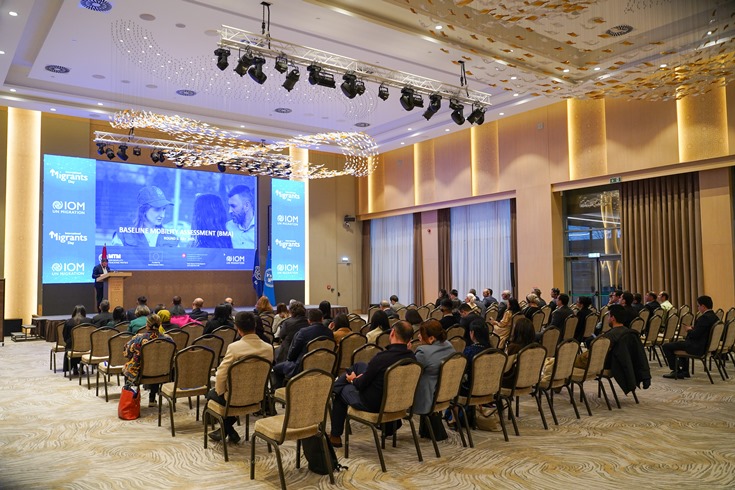
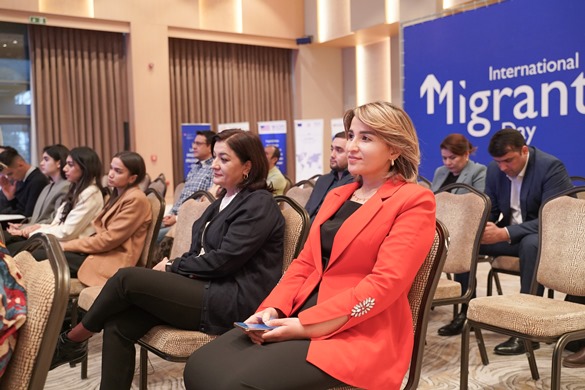
On December 18, the National Migration Forum 2025 was held at the Crowne Plaza Hotel in Dushanbe under the theme “Migrants Shaping the Future: Evidence-Based Insights.” The event was held in observance of International Migrants Day, which was celebrated annually on December 18.
The forum brought together representatives from the Government of Tajikistan, international organizations, development partners, embassies, UN agencies, the private sector, and the media.
Launch of IOM country strategy.
As part of the forum, the International Organization for Migration (IOM) Country Strategy for Tajikistan 2026–2030 was presented.
The strategy outlined priority areas for supporting safe, orderly, and regular migration over the next five years. It focused on three key priorities:
· Saving lives and protecting people on the move;
· Driving solutions to displacement;
· Facilitating pathways for regular migration.
The forum also featured the presentation of the Round 5 findings of the Baseline Mobility Assessment and Return Migrant Survey. The surveys provided insights into current migration trends, migrant profiles, drivers of migration, vulnerabilities, and needs, including gender perspectives.
“Today, we present a strategic vision for how IOM will support Tajikistan in harnessing safe, dignified, and well-managed migration for the benefit of all. Migration touches nearly every family in Tajikistan and profoundly shapes the country’s social and economic landscape. This Strategy is grounded in evidence and a deep understanding of migrants’ needs and aspirations. Migrants are not only supporting their households—they are driving Tajikistan’s development through their resilience, skills, and forward-looking mindset,” said Victor Lutenco, IOM Chief of Mission in Tajikistan.
Migration played a vital role in the socio-economic development of Tajikistan. Migrants not only provided financial support to their families but also brought new skills, ideas, and experiences that contributed to the country’s development.
The forum aimed to amplify the voices of migrants through their stories and testimonies, strengthen partnerships between government institutions, international organizations, and civil society, and support evidence-based migration policymaking.

New Year’s fairs open in Dushanbe: a price comparison with the bazaars
Uzbek national gets a jail term of three years for participating in war in Ukraine
Youth clash prevented in Dushanbe, cold weapons seized
Trump invites Kazakhstan and Uzbekistan leaders to G20 summit in Miami
Tajik sambo masters win 30 medals at the Asian Cup
Uzbekistan’s security service reports two large drug hauls
“Life has become impossible.” Fewer Central Asian migrants are choosing to work in Russia
A 21-year-old man arrested on suspicion of corrupting a 13-Year-old girl
US triples payment to illegal aliens who sign up for self-deportation
How Russian propaganda and xenophobic sentiments led to the death of Qobiljon Aliyev
All news
Авторизуйтесь, пожалуйста