




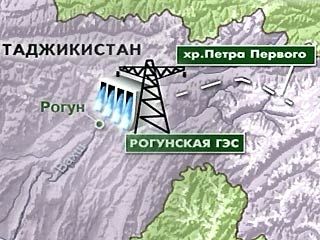
DUSHANBE, October 23, 2013, Asia-Plus -- The fourth information-sharing and consultation meetings on the Assessment Studies for the proposed Roghun Hydropower Project (Roghun HPP) took place on October 17, 18, and 20 by videoconference from Dushanbe with connections to World Bank offices in Central Asia, Washington, D.C., as well as Kabul, Afghanistan, and Paris, France. The purpose of these meetings was to update riparian governments and civil society organizations on interim technical findings, take questions, and receive feedback.
According to press release issued by the World Bank Dushanbe Office, riparian government representatives from Afghanistan, Kazakhstan, Kyrgyz Republic, and Tajikistan attended; a separate discussion was held with more than 30 civil society organizations via videoconference between Almaty, Astana, Ashgabat, Bishkek, Dushanbe, Kabul, and Tashkent. The Bank reportedly also briefed representatives of the donor organizations and diplomatic community in Central Asia on the latest findings of the assessments and the outcomes of the riparian information-sharing meetings.
The fourth riparian meetings focused on the issue of dam safety, which is part of the ongoing Techno-Economic Assessment Study (TEAS). According to the Terms of Reference, the TEAS includes the following phases: Phase 0: Assessment of the salt dome issue at the project site; Phase I: Assessment of the existing Roghun HPP site and works; and Phase II: Roghun HPP project definition options. Phase 0 and Phase I studies, which were presented and discussed during the fourth riparian meetings, provide an input for the ongoing Phase II assessment.
The meetings presented two summaries of reports: Geological and Geotechnical Investigation of the Salt Wedge in the Dam Foundation and Reservoir (Phase 0 of the TEAS Terms of Reference); and Assessment of the Existing Roghun HPP Works, including caverns and tunnels (Phase I of the TEAS Terms of Reference).
The first report examines the potential risks to dam safety of the wedge of salt that exists along the Ionakhsh Fault. The consultants’ findings indicate that there are viable mitigation measures that could be taken and monitored throughout the life of the proposed project to prevent the salt wedge from endangering dam safety. The second report evaluates the conditions of the existing facilities at the Roghun site, including tunnels and powerhouse caverns. The consultants have concluded that several of the underground structures, including the existing two diversion tunnels and the powerhouse cavern, would require mandatory strengthening and remedial measures to be operated safely. These measures have been assessed and the costs are being included in the cost estimates, which will serve as an input into the ongoing economic and financial assessment of the proposed Roghun HPP.
“The World Bank is committed to facilitating good practice in information-sharing and we encourage the involvement of all riparian countries from government, civil society, and the public,” said Marsha Olive, World Bank representative who chaired the riparian meetings. “We want to help put the facts on the table as interim reports become available to enable an informed debate on every aspect of the proposed Roghun project. We are particularly attentive to the application of modern international standards for safety, environmental, and social protection. The questions and concerns expressed by riparian 2 of 2 stakeholders during these meetings are vital to a robust regional dialogue on the proposed Roghun project.”
During the meetings, questions and comments from the riparian governments focused on the specific implications of the remedial measures recommended by the consultants, the next steps in the Assessment Study process, and the value of bringing the riparian representatives together with the consultants and independent Panel of Experts for a constructive, informative dialogue. Civil society participants focused on learning more about the analysis conducted by the consultants, the implementation of the remedial measures that have been identified, and the overall process of analyzing the proposed project.
The meetings reportedly provided an opportunity for interaction with the consortium of consultants conducting the studies and with members of the independent World Bank-financed Engineering and Dam Safety Panel of Experts that is providing additional oversight to the TEAS. During their presentations, the Panel of Experts endorsed the conclusions of the consultants based on their own analyses and site investigations.
The Panel of Experts re-emphasized the need to monitor and implement safety-related mitigation measures and maintenance over the life of any dam. The Panel also commended the Government of Tajikistan for ensuring transparency and demonstrating good practice in information-sharing through this phase of the Assessment Study process.
“The documents shared for these meetings are drafts and will not be considered final until after comments from riparian governments and civil society stakeholders are received and carefully considered,” said Ms. Olive. “It is important to clarify again that the Assessment Studies will not decide whether the proposed Roghun dam will be built, they will only serve as an input to decision-making. The World Bank’s financing of the Assessment Studies and consultative process does not imply that the Bank will finance the proposed project in the future.”
The fifth riparian meetings will be scheduled at a later date to review summaries of draft Phase II Techno-Economic Assessment Study (TEAS) and the draft Environmental and Social Impact Assessment (ESIA).


More than 2.7 million Tajiks visited Uzbekistan in 2025 for tourism, medical treatment, and education
Recruitment tender
Moody’s raises Tajikistan's credit rating to "B2" with stable outlook
The Line of Durand: How far will the armed conflict between Pakistan and Afghanistan go?
Dushanbe Water Conference 2026 to focus on water management, climate change, and innovation
Emomali Rahmon introduces staff changes in Supreme Court, prosecutor’s offices, and interior ministry
From which countries cars are imported into to Tajikistan?
Trump says he must be ‘involved’ in choosing Iran’s next supreme leader
Dushanbe to host Judo Grand Slam again
Record-breaking temperatures in Central Asia in February: rising risks of global warming
All news
Авторизуйтесь, пожалуйста