





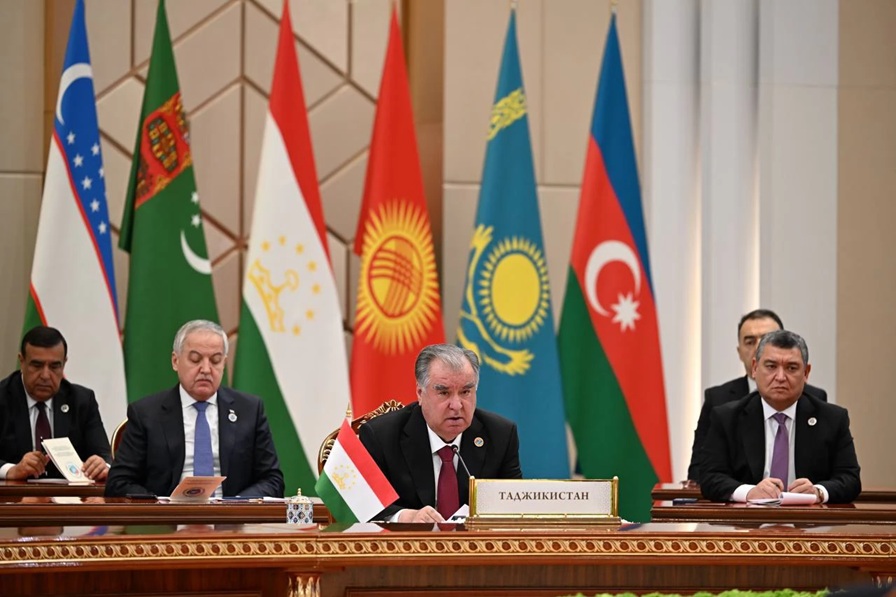
At the 7th Consultative Meeting of the Heads of Central Asian States, held in Tashkent in mid-November, it was announced that Azerbaijan would join this format as a full member. Previously, Azerbaijan participated as an honorary guest.
“Today is truly a historic day for our brotherly peoples. We are making a principled decision to accept the Republic of Azerbaijan into the format of consultative meetings as a full member,” said Uzbekistan’s President Shavkat Mirziyoyev at the meeting. He emphasized that this move would pave the way for the formation of a unified space of cooperation, which will undoubtedly strengthen the strategic interconnectedness and resilience of both regions.
In an exclusive interview with Asia-Plus, Azerbaijan’s Ambassador to Tajikistan, Alimirzamin Gavvam oglu Askerov, discussed the significance of this development for both the region and Azerbaijan itself.
Azerbaijan and Central Asia: a unified space
“Azerbaijan officially became a full participant in the Consultative Meetings of Central Asian Heads of State in November 2025,” noted the ambassador. The initiative to hold these meetings was proposed by Uzbekistan’s President Shavkat Mirziyoyev in 2017. The first meeting was held in Kazakhstan, followed by meetings in Uzbekistan, Turkmenistan, and Kyrgyzstan. The fifth meeting, held in September 2023 in Dushanbe, saw Azerbaijani President Ilham Aliyev attend for the first time as an honorary guest.

According to President Aliyev, Azerbaijan and Central Asian countries are forming a unified historical, cultural, geographical, and geopolitical space that holds growing strategic importance. While the Caspian Sea might physically separate Azerbaijan from Central Asia, it is, in fact, a symbol of strategic unity, economic potential, and historical cooperation.
Practical benefits of cooperation
On the practical benefits of Azerbaijan’s cooperation with Central Asian countries, the ambassador noted that thanks to the authority of President Aliyev, Azerbaijan has become a country that offers successful new initiatives and plays an important role on the international stage.
“Azerbaijan’s active role in organizations such as the Non-Aligned Movement and the Organization of Turkic States has broadened its influence on global processes,” he added.
One of the key areas of cooperation is the development of transport infrastructure. The "Middle Corridor," connecting China, Central Asia, Azerbaijan, Turkey, and Europe, is crucial for regional logistics and holds strategic significance for all the countries involved.
Transport routes and energy cooperation
Transport infrastructure, such as the Trans-Caspian International Transport Route (TMTM), plays a major role in economic development, reducing delivery times, and enhancing trade across the region.
Azerbaijan is also developing energy cooperation, including green energy exports, which is vital for Central Asia, a region rich in renewable energy potential.
Azerbaijan and Tajikistan: brotherly relations
Azerbaijan and Tajikistan have strong and growing bilateral relations, with Azerbaijan being one of the first countries to establish diplomatic ties with Tajikistan in 1992. High-level visits have played a crucial role in strengthening these ties.
Cultural and tourism cooperation is also flourishing, with Azerbaijan’s Culture Days held in Tajikistan this year, and Tajikistan’s Culture Days scheduled for 2024 in Azerbaijan.
The establishment of direct air links between Baku and Dushanbe has significantly contributed to expanding these relations.
Prospects for Central Asia
Azerbaijan’s full membership in the Consultative Meetings of Central Asian countries opens up new opportunities for the region. This not only enhances transit routes but also strengthens political and economic cooperation in energy, security, and digital development.
"In the future, the countries will be able to cooperate more effectively in areas such as security, cyber threats, and the fight against extremism, as well as creating a unified digital space," the ambassador concluded.
 Руcский
