




DUSHANBE, October 13, 2011, Asia-Plus -- One of initiators of the bill requiring amendments to the country’s anti-corruption law advises heads of governmental bodies to dismiss their immediate relatives working under their supervision as soon as possible.
Amendments proposed to the country’s anti-corruption law will go into effect being seconded by the upper house (Majlisi Milli) of the parliament and signed by the president.
Under one of these amendments, high-ranking state official are now prohibited from taking on not only their children but also their children-in-law.
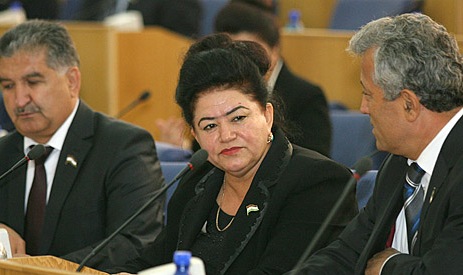
Deputy of the Majlisi Namoyandagon (Tajikistan’s lower chamber of parliament) Saodat Amirshoyeva, who is one of authors of the bill requiring amendments to the anti-corruption law, told Asia-Plus Thursday afternoon that the main objective of the amendments is in strengthening fight against corruption and nepotism in the ministries and agencies.
“I advise heads of governmental bodies to dismiss their immediate relatives working under their supervision until this law goes into effect; otherwise, they will be made answerable under the law,” MP noted.
The Majlisi Namoyandagon endorsed the amendments proposed to the country’s anti-corruption law on October 12. The children-in-law are now also considered immediate relatives of the high-ranking state officials. Earlier, only the wife, the husband, parents, children and children-in-law’s parents had been considered immediate relatives of the high-ranking state officials.
The amendments to the anti-corruption law were initiated by the Majlisi Namoyandagon Deputy Speaker, Ms. Nazira Ghafforova, and MPs Barakatullo Atokhoja (ex-Tursunzoda mayor) and Saodat Amirshoyeva (ex-prosecutor of the city of Qurghon Teppa).
Besides, the bill requires adding an additional article determining principles of international cooperation of Tajikistan in combating corruption to the anti-corruption law.
International experts say all five post-Soviet Central Asian states are characterized by rampant nepotism, which has arguably become the main obstacle hampering their economic and political development.
We will recall that in a report released at a news conference in Dushanbe, the head of the Center for Strategic Studies under the Tajik President, Suhrob Sharipov, noted on April 15 that President Emomali Rahmon has the right to appoint relatives to senior posts if they have the qualifications. “Family links have always been used and will be used in Tajikistan. We have such a mentality that relatives try to be close to each other. Family links will always be used in our country by everyone no matter who is in power.” Sharipov said the reason nepotism isn''t so prevalent in western democracies is because of “demographic problems,” and because families often live scattered apart.


Statistics vs. wallet: Tajikistan's rising income vs. stagnant quality of life
Kazakhstan's foreign minister visits Freedom IT-Hub in Dushanbe
Uzbekistan plans to launch "Mirzo Ulugbek" satellite and prepare first astronaut
405 people released from liability in Tajikistan for 'liking' extremist-related content
Russia approves agreement allowing migrants from Tajikistan to undergo medical exams before entering Russia
Tajik president holds talks with Kazakhstan's foreign minister to discuss cooperation
Tajik, Kazakh top diplomats discuss economic and cultural cooperation
9 million somoni found in inspector’s account: prosecutors uncover major energy sector embezzlement scheme
Tajikistan records 177 human trafficking cases last year
“They want to undermine our relations with China”: Tajik prosecutor-general on clashes along the Afghan-Tajik border
All news
Авторизуйтесь, пожалуйста