




In a statement delivered at the 3rd Dushanbe Water Action Decade Conference, Tajik president Emomali Rahmon noted on June 11 that today's world is under the influence of severe crises.
“In recent years, in addition to common threats, including climate change, unfortunately, we are witnessing new threats and dangers that require double the attention of the world community, including the pressing issues of water,” Tajik leader said, noting that the negative impacts of climate change on water resources, primarily on water sources and drinking water, are clear examples.
“Water is not just a resource for drinking; it plays a key role in power generation, food production, industrial development, environmental sustainability and other aspects of human life,” said Emomali Rahmon. “In New York, we held five constructive interactive dialogues related to the importance of water in ensuring health, sustainable development, resilience to climate change, developing cooperation, and further steps within the Decade of Water for Sustainable Development; we achieved significant results.”
“In order to strengthen these achievements and to continue constructive dialogues, we developed the program of the Dushanbe Conference in accordance with the program of the UN 2023 Water Conference.”
To this end, Tajik leader called on the co-chairing countries of the New York dialogues to take the lead in discussing relevant topics.
According to him, 2024 can be a year of high tribute to water resources.
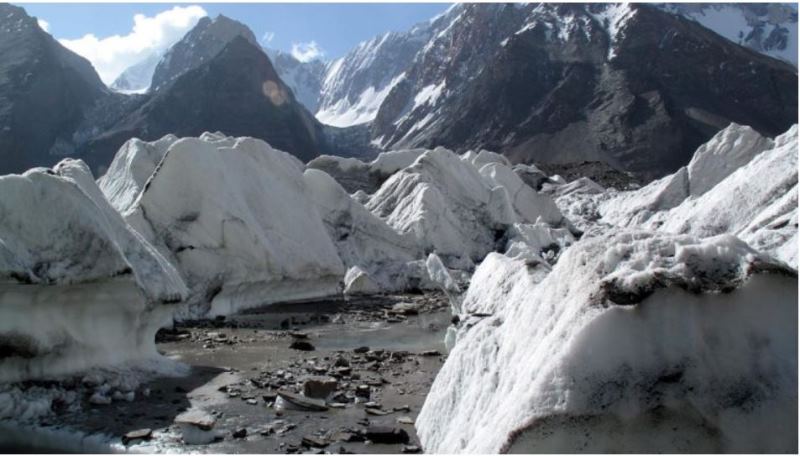
He drew attention of the conference participants to the problem of glaciers, which are one of the main sources of fresh water.
Along with the unprecedented increase in the demand for water, which is related to the increase in population and economic development, the rapid melting of glaciers and the reduction of their resources have caused deep concern for the international community.
According to Rahmon, this process can be clearly observed in Tajikistan.
“Over the past few decades, 1,000 of the 13,000 glaciers of our country, which are the main source of formation of up to 60% of Central Asia's water resources, have completely melted,” he said noting that as Tajikistan is not an industrialized country, its share in the total amount of greenhouse waste is insignificant.
“It is for this reason that our initiative to declare 2025 as the "International Year of Glacier Preservation" has received full support, and in accordance with the relevant resolution of the General Assembly, starting next year, March 21st will be celebrated annually as "World Day of Glaciers," said Emomali Rahmon. “In this regard, I would like to mention that Tajikistan, being one of the pioneers, made its financial contribution to the activation of the International Special Fund for Glaciers Preservation.”
Emomali Rahmon invited partner countries and international organizations to make their contribution to strengthening the financial capacities of this Fund.
Tajikistan is expected to host a major international conference on glaciers preservation next year.
Tajik leader added that in order to further strengthen this important issue, together with their partners, Tajikistan authorities have decided to draft a resolution of the General Assembly of the United Nations on the declaration of the Decade of Polar Sciences and Glaciology.

Uzbek national gets a jail term of three years for participating in war in Ukraine
Youth clash prevented in Dushanbe, cold weapons seized
Trump invites Kazakhstan and Uzbekistan leaders to G20 summit in Miami
Tajik sambo masters win 30 medals at the Asian Cup
Uzbekistan’s security service reports two large drug hauls
“Life has become impossible.” Fewer Central Asian migrants are choosing to work in Russia
A 21-year-old man arrested on suspicion of corrupting a 13-Year-old girl
US triples payment to illegal aliens who sign up for self-deportation
How Russian propaganda and xenophobic sentiments led to the death of Qobiljon Aliyev
Tajikistan strengthens aviation safety cooperation with Iran
All news
Авторизуйтесь, пожалуйста