




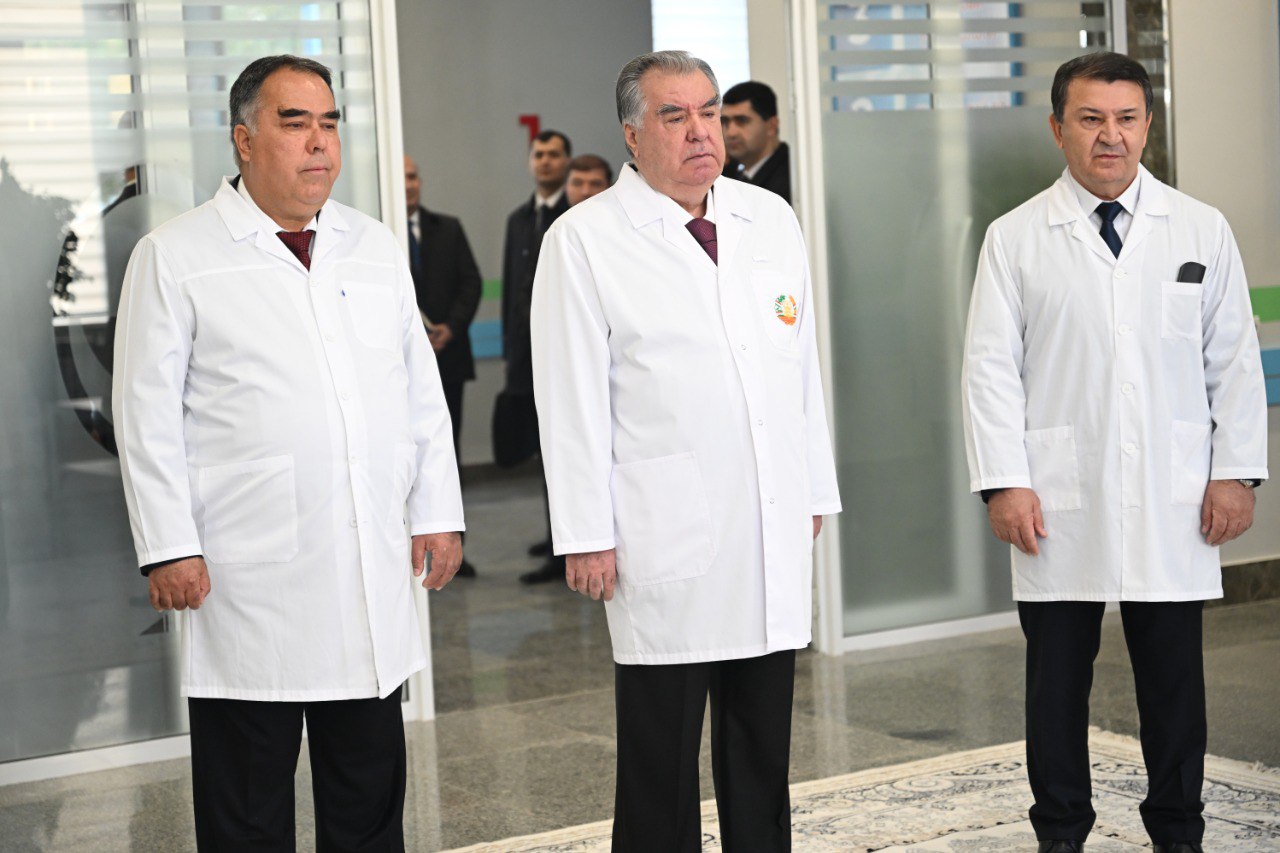
President Emomali Rahmon, who arrived in Tajikistan’s northern Sughd province on November 18 for a working visit, focused on launching new infrastructure projects and reviewing the region’s socio-economic development, according to the Tajik presidential official website..
During the visit, Rahmon reportedly officially opened the newly constructed Sughd Regional Oncology Center. The six-story facility is equipped with 200 hospital beds, bringing the center’s total capacity to 330 when combined with its original building. The new center is outfitted with state-of-the-art medical equipment worth over 7 million somonis, including advanced surgical rooms, diagnostic laboratories, ultrasound, and endoscopic units.

A total of 60 medical professionals, including oncologists—18 of whom have received advanced training abroad—are employed at the center. Medical services have expanded to include 26 new types of surgical procedures, 12 chemotherapy methods, and 18 new types of diagnostic tests.
President Rahmon also inaugurated the Sughd Regional Endocrinology Center named after Jahon Nabiyev. The new five-story facility, which includes a basement, has a 200-bed capacity and houses surgical, intensive care, and emergency departments.

The endocrinology center is equipped with more than 40 types of modern medical devices, enabling it to provide specialized care for patients with diabetes, thyroid and pancreatic disorders, obesity, and infertility. New departments have also been established, including reception, surgical, endocrinology, and pediatric units, according to the presidential office.
President Rahmon instructed the heads of the institutions to make effective use of the new centers, ensure high-quality diagnostics and treatment, and raise public awareness about disease prevention and healthy lifestyles.
Both facilities were built as part of the nationwide development program marking the 35th anniversary of Tajikistan’s independence. Officials say the new centers will significantly improve healthcare services for the population of Sughd region.
 Руcский
