




DUSHANBE, December 8, 2012, Asia-Plus -- 3,661 people have left Tajikistan for Russia under the Russian national program to assist the voluntary resettlement of fellow-countrymen living abroad to the Russian Federation since 2007.
According to the Russian Federal Migration Service (FMS)’s office in Tajikistan, 62 percent of them have higher education.
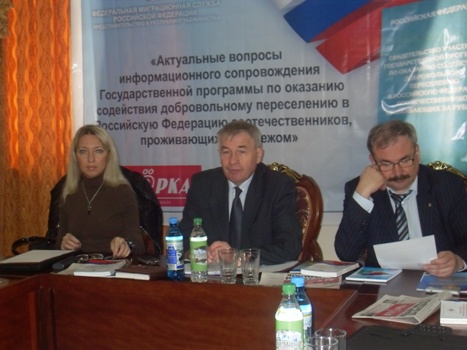
A roundtable to discuss the results of the program took place in Dushanbe on December 7.
Speaking at the meeting, Viktor Sebelev, the head of FMS’s office in Tajikistan, noted that 30 percent of those who had left Tajikistan for Russia under the mentioned program were technical and engineering employees and 15 percent physicians. 30 percent of physicians that have left Tajikistan fro Russia have scientific degrees.
“Tajikistan will feel economic consequences of this program in several years because the country needs those specialists itself,” Ms. Dilorom Rahmatova, social scientist, told Asia-Plus in an interview. According to her, the government must pay attention to this process.
The Russian national program to assist the voluntary resettlement of fellow-countrymen living abroad to the Russian Federation is the three-staged program that was launched in June 2006 and should have been finished this year.
The first stage included adoption of legal documents necessary for organizing the voluntary resettlement of fellow-countrymen to Russia, creation of system to manage the program, assessment of Russia’s requirements in manpower as well as preparedness of regional infrastructure (providing basic social services, housing, etc) for accepting migrants.
The second stage designed for 2007-2008 provided for direct resettlement of the program participants to the Russian Federation as well as analysis of the results of implementation of the regional resettlement programs.
The third stage that was launched in 2009 should have concluded implementation of the program and assessed effectiveness of implementation of the regional resettlement programs.
Meanwhile, by Russian president’s decree of September 14, 2012 the program has become permanent.


Tajik citizen extradited from Azerbaijan to homeland
Tajik somoni strengthens against the dollar and the euro in 2025, weakens slightly to the Russian ruble
How Tajikistan's farmers are adapting to climate change
VIPzone winter issue: key faces, trends, and stories of 2025
186 facilities in Tajikistan suspended in 2025 for sanitary violations
Tajikistan’s debt web: who holds the strings?
Amir Tour named best domestic tourism company in Tajikistan
Tajikistan’s ambassador urges students studying in Russia to respect local laws and values
Certain batches of NAN baby formula withdrawn in Tajikistan over potential toxin risk
Legendary U.S. investor buys shares on Uzbekistan’s stock exchange
All news
Авторизуйтесь, пожалуйста