




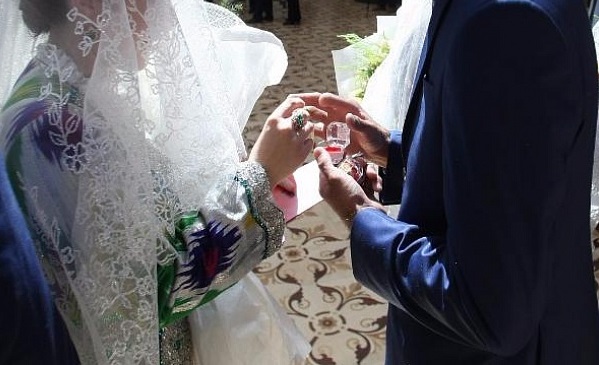
The first-ever analysis on child grooms, released by the UN Children’s Fund (UNICEF) on June 7, in particular, notes that an estimated 115 million boys and men around the world were married as children, 23 million of them before the age of 15.
The study discovered that child marriage among boys spans sub-Saharan Africa, Latin America and the Caribbean, South Asia, East Asia and the Pacific.
According to the data, 28 per cent of the males in the Central African Republic were married as children, ranking it first in male child marriages. At 19 per cent, Nicaragua was the second and Madagascar the third, at 13 per cent.
“Marriage steals childhood”, said UNICEF Executive Director Henrietta Fore. “Child grooms are forced to take on adult responsibilities for which they may not be ready”.
“Early marriage brings early fatherhood, and with it added pressure to provide for a family – cutting short education and job opportunities”, the UNICEF chief elaborated.
Notwithstanding the new information, girls remain disproportionately affected, with 1-in-5 young women between the ages of 20 and 24, married before their 18th birthday, compared to 1-in-30 young men.
While the prevalence, causes and impact of child marriage among girls have been extensively studied, little research exists on child marriage among boys. It is clear though that children most at risk come from the poorest households, live predominantly in rural areas and have little to no education.
“As we mark the 30th anniversary of the adoption of the Convention on the Rights of the Child, we need to remember that marrying boys and girls off while they are still children runs counter to the rights enshrined in the Convention,” reminded Ms. Fore.
“Through further research, investment and empowerment, we can end this violation”, she asserted.
According to the statistical data from the Interior Ministry of Tajikistan, thirteen cases of giving underage girls in marriage and sixteen cases of getting married to underage guys were reported in Tajikistan in 2018. Appropriate measures at the legislative level were reportedly given against their parents.
Meanwhile, according to the UNCIEF study, 12 percent of girls in Tajikistan were married in 2017 before the age of 18.
Child marriage is reportedly driven by gender inequality and the belief that women and girls are somehow inferior to men and boys. In Tajikistan, child marriage is also driven by:
- Poverty -- girls are commonly seen as economic “burdens” and are married off in forced, unregistered or polygamous marriages to relieve this perceived pressure. Younger girls are seen as easier to manage by prospective families;
- Pre-marital sex -- child marriage is sometimes considered to “safeguard” against immoral behavior when girls grow into dukhtar (young women) at 15. Some girls express anxiety and pressure to marry at this time;
- Level of education -- child marriage is driven by a lack of education, and also results in high numbers of girls dropping out of school. Tajikistan’s weak economy means there is little incentive to support girls in pursuing higher education before marriage;
- Traditional customs -- some families choose religious schools for their daughters, which focus on domestic skills in preparation for marriage.
- Religion -- some parents still turn to religious leaders (mullahs) to hold wedding ceremonies for young girls. Nikoh marriages – although not recognized legally by the state – are considered by many to have greater value than civil registration. This is more common in rural areas and does not provide girls with the rights and protections afforded by the law.
- Gender imbalance -- many men are migrating to Russia for work, which has led to an unbalanced gender ratio in Tajikistan. Parents sometimes feel pressured to marry daughters off when a suitable groom is identified.
 Руcский
