




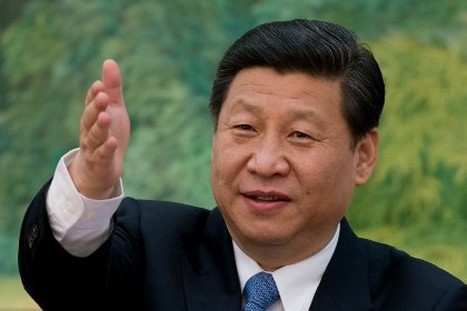
DUSHANBE, March 14, 2013, Asia-Plus -- Leaders in Beijing have confirmed Xi Jinping as president, completing China''s 10-yearly transition of power.
International media sources say Mr. Xi, appointed to the Communist Party''s top post in November, replaces Hu Jintao, who is stepping down.
The BBC reports some 3,000 deputies to the National People''s Congress, the annual parliament session, reportedly took part in the vote at the Great Hall of the People. Xi Jinping was elected by 2,952 votes to one, with three abstentions.
The son of a revolutionary veteran, 59-year-old Mr. Xi held top party roles in Zhejiang and Shanghai, before being appointed to the Standing Committee - China''s top decision-making body - in 2007.
Since his elevation to the top of the party in November, Mr. Xi has been feted in Chinese media as a man of the people who shuns the usual trappings of his position.
He has spearheaded an austerity drive for officialdom, in a move seen as an attempt to address rising public anger over the perceived luxurious lifestyles of leaders.
He has also been widely quoted in state media on the need to stamp out corruption at all levels, warning of civil unrest if party privilege is not tackled.
According to the BBC, Mr. Xi assumes the leadership of a nation that is growing wealthier but more vocal in its anger at issues such as rising inequality, environmental damage and food safety.
He also faces concern among regional neighbors over how China will wield its rising power, particularly in relations to thorny issues such as territorial disputes with Japan and ASEAN nations.
Xi Jinping is expected to make his first overseas visit as president to the BRICS summit in South Africa at the end of March. He is also expected to visit Russia.
The new premier - widely expected to be Li Keqiang - is scheduled to be named on Friday, replacing Wen Jiabao, the BBC reports.


First pilot container train successfully departs from China to Tajikistan
How a Tajikistani native made his way to one of the world’s most influential tech companies
Two traders arrested on the first day of Ramadan for overcharging on meat in Dushanbe
27 young men sentenced in Tajikistan last year for avoiding military service
Uzbekistan launches jury trial system as an experiment
Job market in Tajikistan: Somon.tj identifies most in-demand professions and market trends
Russian lawmaker proposes migrants should receive benefits only after 20 years of residence in Russia
Tajikistan in 2025: economic growth, inflation, and foreign trade
Police in Dushanbe urges entrepreneurs to avoid unjustified price increases during Ramadan
"No criminal cases have been initiated": Tajikistan has not punished citizens for participation in the war in Ukraine
All news
Авторизуйтесь, пожалуйста