




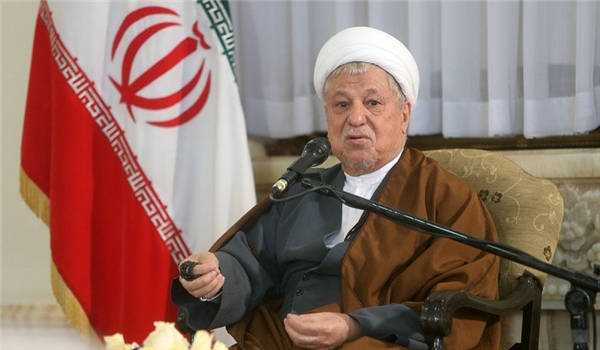
Ali Akbar Hashemi Rafsanjani, Iran’s greatest political survivor who served as president for two consecutive terms, died in Tehran yesterday, aged 82, according to Iran’s news agencies.
Iranian media said on January 8 that Rafsanjani had been admitted to the Shohadaa Hospital in northern Tehran because of a heart condition.
State TV later announced that “unfortunately, the doctors' effort was not successful and he passed away.”
Rafsanjani was a founding member of Iran’s 1979 Islamic revolution.
“The soul of a giant man of revolution, politics, a symbol of patience and strength, has ascended to skies,” Iranian President Rouhani tweeted in reaction to Rafsanjani’s death.
“Rafsanjani’s death will weaken Rouhani’s government and will also negatively affect the country’s reformist movement,” Sadeq Zibakalam, a prominent Tehran University professor, was cited as saying by the Guardian.
“Rafsanjani’s political life can be divided in two parts. In the first part, he was part of the establishment and the country’s political system. Until Imam Khomeini’s death, he had an immense power in Iran.
“But after his time as president and particularly in the past two decades, he lost his influence and only had a ceremonial position. That was because he leaned towards democracy and freedom, which were the primary values of the revolution itself. This earned him a great deal of animosity among radical factions who attacked him and insulted him repeatedly until his death,” Sadeq Zibakalam told the Guardian in a phone call from the Iranian capital.
After the 1979 revolution, Rafsanjani became the country’s first speaker of the parliament, a job he kept for nine years. During the Iran-Iraq war, he was the supreme leader Ayatollah Ruhollah Khomeini’s top representative in the supreme defense council, acting as the de facto commander-in-chief of the Iranian military. When Khomeini died in 1989, Rafsanjani played an instrumental role in the appointment of Ayatollah Ali Khamenei as the current supreme leader.
While he was in power, however, he was a moderate politician famous for his pragmatism. He served two terms from 1989 to 1997. During his leadership, Iran went through an extraordinary transformation as the country focused on post-war construction and industrial revival.
Tajik President Emomali Rahmon has sent a cable of condolences to Iranian President Hassan Rouhani over the death of Ali Akbar Hashemi Rafsanjani and asked to convey his sincere condolences to the people of Iran, Rafsanjani’s family and relatives.


President Rahmon makes personnel changes in Tajikistan’s judiciary system and foreign ministry
Growing glacier discovered in the Pamirs, defying global warming trends
How food prices in Tajikistan changed over the past year
Attempt to smuggle medicines worth over 1 billion soums from Uzbekistan to Tajikistan Foiled
IOM warns Tajik citizens of job scams linked to employment in the UK
Tajik family dies from domestic gas poisoning in Samara
Tajikistan establishes National Theater as theater community voices concerns over possible consolidation
Who Emomali Rahmon criticized — and praised — in 2025
Trump announces plans for US ground operation against Mexican drug cartels
Emomali Rahmon shakes up police officials
All news
Авторизуйтесь, пожалуйста