




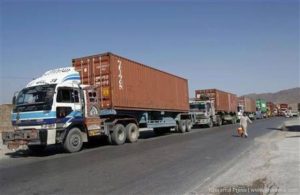
Afghanistan has taken its first steps towards the creation of a National Export Strategy (NES) that will set out its trade priorities.
The National Export Strategy should detail a series of investments needed to unleash export growth and job creation in sectors with high trade potential, detailed five-year action plan, and an integrated implementation management framework, according to a statement released by the International Trade Center (ITC).
Organized by the Ministry of Commerce and Industries (MOCI) and the International Trade Center, the first consultation on Afghanistan’s National Export Strategy that is taking in Kabul provided an opportunity for participants to share their views on issues such as value-chain improvements, supply capacities, competitiveness and quality management. Central to the discussions were also the entry into force of the World Trade Organization’s Trade Facilitation Agreement, which Afghanistan ratified immediately upon joining the trade body in July 2016.
A central component of the Trade for Economic Growth and Regional Cooperation a trade-related support program to Afghanistan funded by the European Union and implemented by ITC in support of MOCI, the National Export Strategy will align with the priorities and development goals established by the Afghan government. It will have a particular focus on socio-economic growth, private-sector development, investment promotion, investor protection, and economic diversification. The final Strategy will also adhere with the principles and instruments of the New Development Planning System that has been established by the Afghan Government as part of the Afghanistan National Peace and Development Framework (ANPDF).
The second participatory consultation to be held in May 2017 will analyze priority sectors and support functions such as access to finance and skills development, which will form the core of the National Export Strategy.


Warm February: how abnormal weather threatens crop yields in Tajikistan
Uzbekistan aims to cut manual labor in cotton harvesting to 30%
Turkish low-cost carrier Pegasus to launch Istanbul-Dushanbe flights
Tajikistan's Beshai Palangon Reserve faces potential water crisis
Private company in Tajikistan to invest $5 Million in post automation
Tajikistan’s anticorruption agency explains the removal of Jaloliddin-Balkh district judge
Joint Statement on the marking of four years since the start of Russia’s full-scale invasion of Ukraine
Tajikistan advances in implementing social entrepreneurship law
Over 500 complaints filed against Kyrgyzstan's GKNB employees after Tashiyev’s resignation
Court sentences school teacher from Levakant to compulsory labor for slapping student
All news
Авторизуйтесь, пожалуйста