




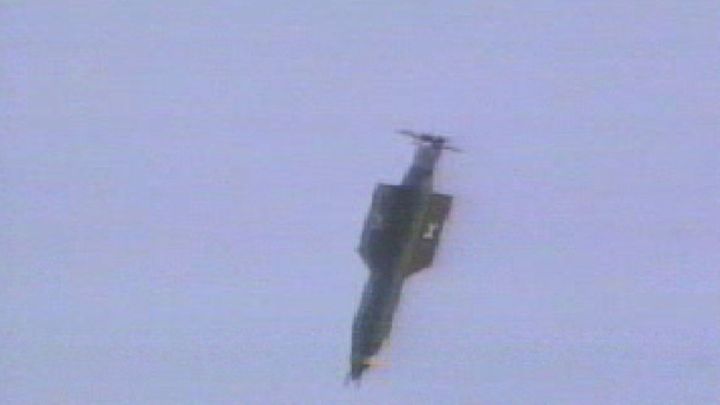
Up to 36 suspected Islamic State militants were killed in Afghanistan when the US dropped the largest non-nuclear bomb ever used in combat, the Afghan defense ministry said on Friday.
To target what the military described as a “tunnel complex” used by the Islamic State (IS) group’s Afghanistan affiliate, the US for the first time used what the military colloquially calls the “mother of all bombs”, the GBU-43/B.
IS commander Siddiq Yar was among those killed, presidential spokesman Shah Hussain Murtazawi told the BBC.
He said that militants in the tunnels had "come from Pakistan and were persecuting people in the local area".
Dawlat Waziri, an Afghan ministry spokesman reportedly said of Thursday’s strike: “No civilian has been hurt and only the base, which Daesh used to launch attacks in other parts of the province, was destroyed.”
Designed for destroying underground targets but not itself a deep-earth penetrator weapon, the GBU-43/B has the explosive yield of more than 11 tons of TNT. The massive bomb is dropped from air force planes and detonates before reaching the ground, resulting in an enormous blast radius. Only the Massive Ordnance Penetrator GBU-57, which has never been used in war, is a larger conventional weapon.
The psychological effect on survivors or observers is considered an added impact of the weapon.
According to The Guardian, Army General John W Nicholson, the commander of US forces in Afghanistan, said in a statement that the GBU-43/B was the “right munition” to use against the Islamic State in Khorosan, or Isis-K.
“As Isis-K’s losses have mounted, they are using IEDs, bunkers and tunnels to thicken their defense. This is the right munition to reduce these obstacles and maintain the momentum of our offensive against Isis-K,” Nicholson said.
The Telegraph reports that Afghanistan's chief executive Abdullah Abdullah confirmed that the attack had been carried out in co-ordination with the government and explained that “great care had been taken to avoid civilian harm.”
Achin district governor Esmail Shinwari told the BBC there were no civilian casualties because no civilians lived in the area.
Meanwhile, a parliamentarian from Nangarhar, Esmatullah Shinwari, reportedly said locals had told him one teacher and his young son had been killed. One man, the MP recounted, had told him before the phone lines went down: “I have grown up in the war, and I have heard different kinds of explosions through 30 years: suicide attacks, earthquakes different kinds of blasts. I have never heard anything like this.”
Former Afghan president Hamid Karzai condemned the use of the weapon on Afghan soil. “This is not the war on terror, but the inhuman and most brutal misuse of our country as testing ground for new and dangerous weapons,” Mr. Karzai said on social media network Twitter.


Three-year-old child dies after beating in Fayzobod district; stepmother suspected
Tajikistan expands list of officials required to declare assets and income
AFOT: Shaping the future of Tajikistan’s financial sector
Uzbekistan launches foreign currency savings program for orphans
Two men detained in Sughd province for alleged murder of fellow villager
Top Iranian diplomat calls for closer ties with Tajikistan
QR сodes introduced in Dushanbe to verify legality of new housing developments
MegaFon Tajikistan summarizes its 2025 tech achievements: network expansion and leadership in quality
New Year weather in Tajikistan: rain, snow, and avalanche risk
Uzbekistan to toughen penalties for marriages with minors and close relatives
All news
Авторизуйтесь, пожалуйста