




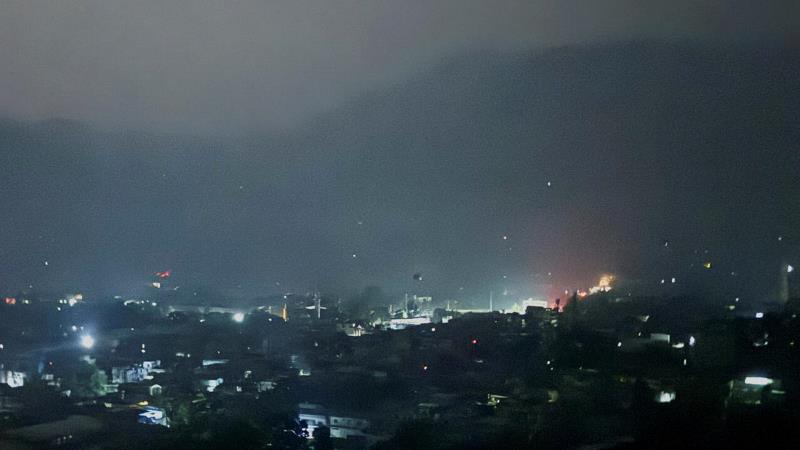
The Indian Armed Forces attacked Pakistan during the night of May 7 as part of a military operation called "Sindhur." Indian authorities announced they had launched strikes on "terrorist" infrastructure in Pakistan, as well as in the Pakistan-administered part of Kashmir, BBC’s Russian Service reported yesterday, noting that a total of nine targets in Pakistan were hit.
This came two weeks after New Delhi accused Islamabad of supporting militants who carried out an attack on tourists in the Indian part of Kashmir, killing 26 people. Pakistan denied the allegations, calling them unfounded.
In their statement, Indian authorities said the country's armed forces began Operation Sindhur by targeting terrorist infrastructure in Pakistan and in Jammu and Kashmir under Pakistani control.
Indian officials claim the missile strikes hit nine militant-linked sites involved in planning and executing attacks against India. They emphasized that the operation was precise and targeted, aiming to avoid escalation and focusing solely on Islamist militant bases.
“No Pakistani military facilities were targeted. India demonstrated considerable restraint in the choice of targets and the means of engagement,” India stated.
Pakistan, on the other hand, claims the strikes hit civilian areas rather than terrorist targets.
According to Pakistani authorities, Indian aircraft launched missiles from Indian airspace, resulting in eight deaths, 35 injuries, and two people reported missing.
Among the dead, according to the Pakistani military, were two children. It is also claimed that one of the strikes hit a mosque.
Pakistan decided to respond
Pakistani Prime Minister Shehbaz Sharif condemned India’s strikes, calling them a "sneaky attack" and vowed that Pakistan would respond.
“All of our Air Force fighter jets are in the air. This is a shameful and cowardly attack carried out from Indian airspace,” he said.
The Pakistani army clarified that India carried out 24 strikes on six sites within Pakistan.
Defense Minister Khawaja Asif condemned India for the attack, calling it cowardly and stating that Pakistan would "respond at a time and place of its choosing," Meduza reported.
However, several media outlets reported that Pakistan’s air force and army had already begun retaliatory strikes against India from both the air and the ground.
In response, India later reported artillery fire from Pakistan along the Line of Control in Kashmir.
Pakistan also claimed it had shot down five Indian fighter jets, including three French Rafale jets and two Su-30MKI and MiG-29 aircraft.
India has neither confirmed nor denied these claims. It is also reported that the Pakistani army destroyed the headquarters of one Indian brigade.
Indian authorities closed schools in areas along the Line of Control, and Pakistan closed schools in Islamabad and other border regions as well.
In recent days, there were reports of gunfire exchanges along the border. Due to the deteriorating situation, there were predictions that India might launch military strikes in response, as it had done in 2016 and 2019.
U.S. President Donald Trump responded to the escalation of military actions between India and Pakistan. He expressed hope that the conflict would end soon. “They’ve been fighting each other for many decades — even centuries, if you think about it… I just hope it ends very quickly,” Trump said.
What triggered the escalation?
The decades-long conflict between India and Pakistan escalated following a militant attack in the city of Pahalgam on April 22, which left 26 people dead, most of them tourists, according to dw.com.
India blamed Pakistan for supporting the attackers, but Pakistan rejected the accusations and called for an independent investigation.
Indian Prime Minister Narendra Modi vowed to punish all those involved in the attack and noted that India’s armed forces had "full operational freedom" in deciding the timing and manner of their response.
India and Pakistan have fought three wars since gaining independence from Britain, twice over the disputed region of Kashmir — in 1947 and 1965.
The third war, in 1971, led to the creation of Bangladesh.
In 1999, the countries engaged in combat again, though it was not officially declared a war.
Research shows that both countries currently possess nuclear arsenals, with each having about 170 warheads.


Asia-Plus launches special project on animal protection
Man detained in Dushanbe on suspicion of illegal religious teaching and child abuse
Prosecutor-general confirms dismissal of Bouston prosecutor after restaurant incident
Tajik authorities seek removal of EU sanctions on its three banks
Tajikistan to allocate 100 hectares for Paulownia plantations in 2026
Victims’ lawyers seek life sentences in Crocus terror attack case
OTS softens rhetoric on Tajikistan after Kyrgyz border deal
Tajik brand to debut at New York Fashion Week
Tradition, fashion, or financial hardship: why women become second wives — and men take them — in Tajikistan
More than 2,600 individuals wanted by Tajik law enforcement authorities detained in 2025
All news
Авторизуйтесь, пожалуйста